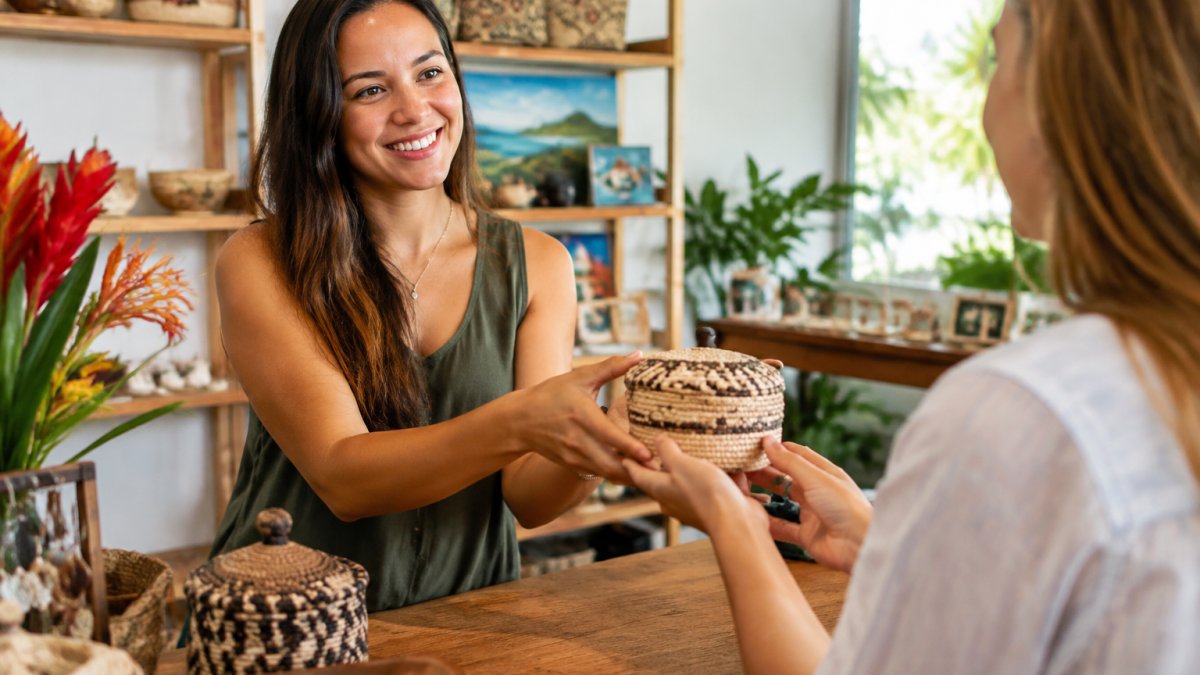
The Artisan's Guide to Building Customer Loyalty Online
Last Updated: November 19, 2026
Quick Summary
To build customer loyalty online, reduce friction in your digital booth so buyers can find your work and check out in under two minutes, then follow up personally after each sale. Remember what each buyer cared about, reply within a day, and only add a loyalty program once the reward math fits your margins.
- Put your best three pieces at the top, price everything clearly, and add one honest line about materials and care.
- Ask one question at checkout, remember the answer, and use it once rather than sending monthly blasts.
- Set your maximum reward at a fraction of estimated customer lifetime value, well under your repeat-order gross margin.
- Track outstanding points monthly, add a 12-month inactivity expiration, and cap how many points one order can redeem.
- Compare program members with non-members over at least one full repeat cycle, often 60 to 90 days, before expanding.
Table of Contents
- Why Customer Loyalty Matters for Online Artisans
- How to Increase Customer Loyalty by Improving the Online Experience
- How to Build Customer Loyalty Online Examples from Real Makers
- Designing a Customer Loyalty Program That Fits Your Margins
- How to Build Customer Loyalty Online Free Using the Tools You Already Have
- Measuring Loyalty So You Know What Is Working
- Privacy-Conscious Personalization and Consent
- Common Mistakes That Undermine Online Loyalty
- Join the Insiders List and Start Reconnecting With Past Customers
- Frequently Asked Questions
Why Customer Loyalty Matters for Online Artisans
Customer loyalty is the measurable tendency of a buyer to return to the same maker, again and again, instead of shopping around for the cheapest alternative. For a small artisan, it is the difference between a booth that starts from zero every Saturday and a business that compounds. A study published in SHS Web of Conferences on customer-centered design and loyalty found that loyalty builds when the customer's experience, not the seller's convenience, drives design decisions.
Makers who treat a fair sale as the start of a relationship tend to keep those buyers longer than those who treat it as a one-off transaction.
How to Increase Customer Loyalty by Improving the Online Experience
Most artisans assume loyalty comes from discounts. It comes from reducing friction. A buyer who can find your booth, understand your work, and check out in under two minutes is far more likely to come back than one who fought a confusing page for a coupon.
Make Your Digital Booth Easy to Browse and Buy From
Your booth is a storefront, not a gallery. Shoppers skim. Put your best three pieces at the top, price everything clearly, and write one honest line about materials and care under each listing. If you are still choosing where to host your shop, our guide to the best online platforms for local makers compares options built for small-batch sellers.
Watch out: photos that look beautiful on a laptop but crop your product out of frame on a phone are the single most common reason a browsing shopper leaves without buying.
Personalize Communication Without Being Intrusive
Personalization means remembering what a buyer cared about, not flooding their inbox. A short note after a purchase ("I wrapped the koa piece in the same cloth you liked at the fair") does more than a monthly blast. Ask one question at checkout, remember the answer, and use it once.
How to Build Customer Loyalty Online Examples from Real Makers
Real examples beat theory. One Maui vendor found that a buyer who had seen her work at a physical market located her digital booth and made a substantial purchase. A shopper looking for hair braiding on Maui found a digital booth on The Craft Fair Online and a brand-new island look was created for a newlywed from Texas.
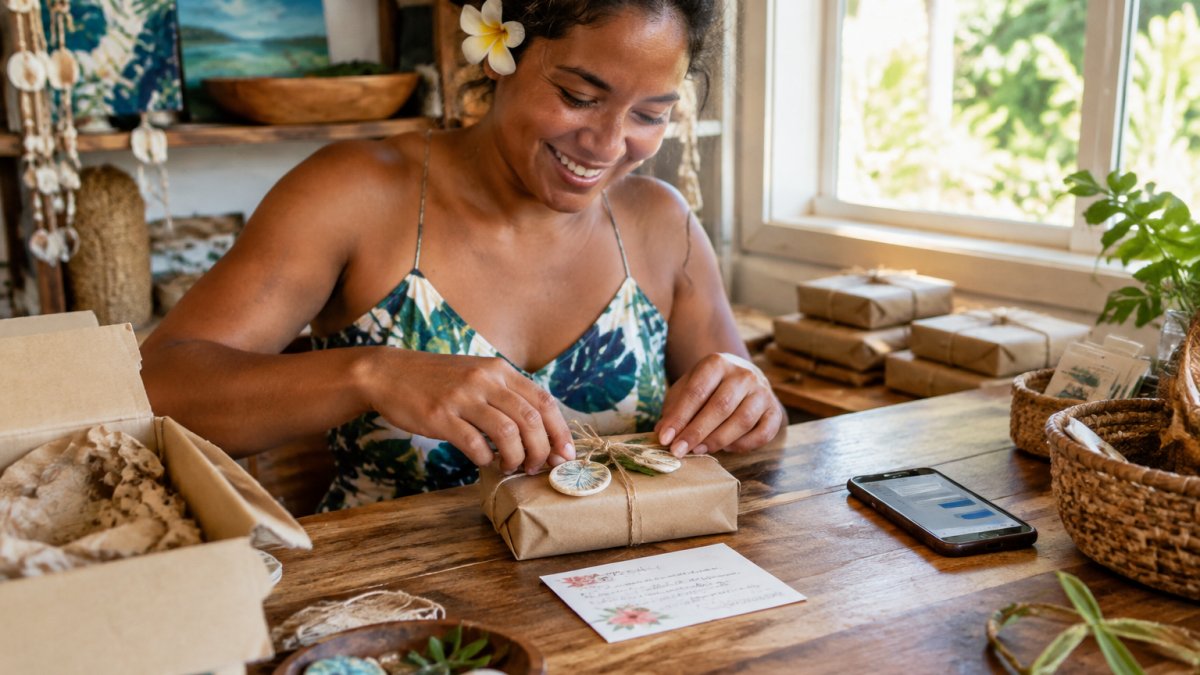
The pattern in these how to build customer loyalty online examples is consistent: visibility plus a fast reply wins the repeat sale.
Designing a Customer Loyalty Program That Fits Your Margins
A customer loyalty program is a structured way to reward repeat buyers, and it only works if the math works. Before you design one, decide what a returning customer is worth to you and cap your reward below that number. A program paying out more than a small share of a customer's lifetime margin can become a cost rather than a retention tool.
Start With the Economics, Not the Perks
Work backward from three figures you can estimate without paid software:
- Average order value (AOV). Total revenue divided by number of orders over a set period, such as the last 90 days.
- Repeat purchase rate. The share of buyers who place more than one order in that period.
- Estimated customer lifetime value (CLV). A simple version is AOV multiplied by average orders per customer per year, multiplied by the average number of years a buyer stays active. If you do not have years of data, use a conservative one-year figure and label it an estimate.
Set your maximum reward at a fraction of that CLV, commonly well under the gross margin you earn on a repeat order. If a $60 handmade piece carries a $30 gross margin and a typical buyer orders twice a year for two years, the estimated CLV is roughly $240 in revenue, or about $120 in gross margin. A reward worth $10-$15 per redeemed cycle leaves room to stay profitable; a $30 reward on every order does not.
Points, Perks, or Early Access: Choosing Your Reward Style
| Reward Style | Best For | Watch Out For |
|---|---|---|
| Points per dollar | Repeat buyers of small items | Slow to feel rewarding; points liability builds quietly |
| Perks (free repair, gift wrap) | Higher-ticket handmade goods | Time cost to you; hard to scale past a few dozen buyers |
| Early access to new pieces | Limited-edition makers | Needs an audience list large enough to matter |
| Spend-threshold rewards (e.g., a gift at the third order) | Makers with a clear repeat cycle | Rewards the wrong buyers if thresholds are too low |
According to LoyaltyLion's Customer Loyalty in 2026 research, low-effort actions such as creating an account and completing a short profile are among the most popular ways shoppers earn points. Ask for the profile once, reward it once.
Preventing Reward Liability From Eating Your Margin
Reward liability is the value of points or credits customers have earned but not yet redeemed. It is a real obligation, even if no cash has moved. Keep it visible:
- Track outstanding points monthly and convert them to a dollar estimate at your redemption rate.
- Put an expiration window on points (for example, 12 months of inactivity) and state it plainly at sign-up.
- Cap how many points a single order can redeem, so one large redemption does not wipe out a month's margin.
- Review redemption rates quarterly; a sudden spike usually means the reward is too generous or the catalog is too easy to cash out.
Watch out: launching a points program before you can track outstanding balances is the fastest way to promise rewards you cannot afford to honor.
Evaluating Whether the Program Is Profitable
Compare two groups over the same window: program members and non-members. Look at repeat purchase rate, AOV, and gross margin per customer. A program is working if members show a higher repeat rate and AOV without a matching drop in margin per order. If members buy more often but at a lower margin, the reward is subsidizing behavior that would have happened anyway. Run the comparison for at least one full repeat cycle, for many makers, that is 60 to 90 days, before deciding to expand or cut the program.
How to Build Customer Loyalty Online Free Using the Tools You Already Have
You do not need a paid platform to start. A phone, a free email list, and a consistent posting habit cover most of it. If you are still working out how to sell handmade goods profitably before investing, our guide on how to start selling handmade goods for profit walks through the basics.
- Collect emails at every fair with a paper sign-up sheet.
- Send one short note the week after each market.
- Post your newest piece to the same social handle every week.
- Reply to every comment and message within a day.
- Ask each buyer for one sentence of feedback.
Measuring Loyalty So You Know What Is Working
Loyalty is measurable, and most makers never measure it. The goal is not a dashboard; it is a small set of numbers you can compute from your order history and compare month over month.
The Core Formulas
- Repeat purchase rate = customers with two or more orders ÷ total customers in the period.
- Retention rate = customers who bought in the current period and also bought in the prior period ÷ customers in the prior period.
- Churn rate = 1 − retention rate (the share who stopped buying).
- Average order value (AOV) = total revenue ÷ number of orders.
- Estimated customer lifetime value (CLV) = AOV × average orders per customer per year × average years active. Use a conservative one-year figure if you lack history, and label it an estimate.
A common pattern for small handmade businesses is a repeat purchase rate in the low double digits to low twenties, but the number that matters is your own trend. Track it monthly and compare against your own prior quarter rather than an industry average you cannot verify.
Use Cohorts, Not Blended Averages
A single blended retention number hides what is happening. Group buyers by the month of their first purchase, a cohort, and track how many from each cohort order again in month 2, month 3, and so on. If the January cohort retains better than the March cohort, something changed in onboarding or follow-up, and you can trace it. Cohorts also stop a single large order from distorting your AOV.
Testing and Attribution
You cannot prove a loyalty tactic works unless you isolate it. Two practical approaches:
- Holdout test. Split your list into two groups at random. Send the post-purchase follow-up to one group and not the other for a set window, then compare repeat purchase rate. Keep the window long enough to cover a normal repeat cycle, often 60 to 90 days for handmade goods.
- Before-and-after with a control. If you cannot split the list, compare buyers who received the tactic against buyers from a similar prior period who did not, and note any seasonality that could explain the difference.
Attribution is the hard part: a repeat sale may come from the follow-up email, a fair conversation, or a social post. Ask one question at checkout ("How did you hear about us?") and log it, so you can separate the channels rather than crediting the last touch by default.
A Simple Monthly Review
Once a month, record repeat purchase rate, retention rate, churn rate, AOV, and estimated CLV in one row of a spreadsheet. Add a short note on what you changed that month, a new follow-up email, a reward threshold, a booth redesign. After three months, patterns appear: if repeat purchases rise after you start sending post-purchase follow-ups, the follow-up is working. If they do not, the message or the timing is wrong. If churn rises while AOV holds, the problem is usually frequency of contact, not price.
Privacy-Conscious Personalization and Consent
Collect less and explain more. Tell buyers exactly what you will email them, how often, and how to stop. Under FTC guidance on consumer privacy and data collection, businesses are expected to be transparent about how they use customer data. Keep your list in one place, honor every unsubscribe request immediately, and never sell contact details.
Common Mistakes That Undermine Online Loyalty
The biggest mistake is going quiet after the sale. A buyer who hears nothing for six months has forgotten you. The second is inconsistent pricing between your fair booth and your online booth, which breeds distrust. The third is slow replies; a customer who waits three days for an answer rarely comes back.
A study published by the Association for Computing Machinery on loyalty in knowledge-based e-commerce found that trust and perceived reliability shape whether customers stay with a seller. Reliability is a habit, not a feature.
Join the Insiders List and Start Reconnecting With Past Customers
The hardest part of building loyalty is starting the conversation with people who already bought from you. That is what our Insiders List is for: a direct line to past customers, paired with Aloha Friday deals and coupons. Digital booths let you preview and order products, and they sit inside a curated space of local makers.
Get started with The Craft Fair Online and turn your last fair's customers into your next season's regulars.
Frequently Asked Questions
How can I create customer loyalty when I only sell at physical craft fairs?
Start by capturing contact information at every booth, then move those relationships online with a simple signup offer. A digital storefront lets past buyers find you between events, and a regular email or text update keeps your work top of mind. Follow up after each fair with a thank-you note and a link to your online booth.
What does a customer loyalty program look like for a small handmade business?
It does not need to be complicated. A customer loyalty program for an artisan can be as simple as a buy-five-get-one offer, early access to new collections, or a small discount on birthdays. Decide what protects your margins before you launch, and let shoppers know exactly how to earn rewards. Low-effort actions, such as a short profile setup, can work well as reward triggers.
How to build customer loyalty online free when I have no marketing budget?
Free tactics carry most of the weight early on. Send a personal thank-you message after each order, ask happy buyers for reviews, and post behind-the-scenes photos of your process on social media. Collect emails at fairs and online, then send a short monthly update with new pieces and fair dates. Reply to every comment and question quickly. These habits build customer trust and word of mouth without spending anything, and they give you the data you need before paying for any tools.
How to increase customer loyalty without cutting prices?
Discounts are one lever, not the only one. Faster replies, clearer shipping updates, and packaging that feels personal all raise customer satisfaction. Share the story behind each piece so buyers understand the value. Offer bundles or early access instead of straight markdowns. Save discounts for moments like Aloha Friday deals where you control the terms.
How do I measure whether my loyalty efforts are working?
Track three numbers: repeat purchase rate, retention rate, and customer lifetime value. Repeat purchase rate is the share of buyers who order more than once in a period. Retention rate compares customers at the start and end of a month or quarter. Customer lifetime value is average order value multiplied by purchase frequency and customer lifespan. Watch churn rate too, since rising churn signals a problem before revenue drops. A simple spreadsheet updated monthly is enough to spot trends.